
Built for founders Season 2 is live 10 days left

Where founders rise on merit, not connections.

Share your journey, publish your startup, build your team, climb the global rankings — every founder here has a face, a team, and a story behind the product.

Filtered by #opensource Clear
HUQAN

Which EU AI Act requirements can HUQAN support?

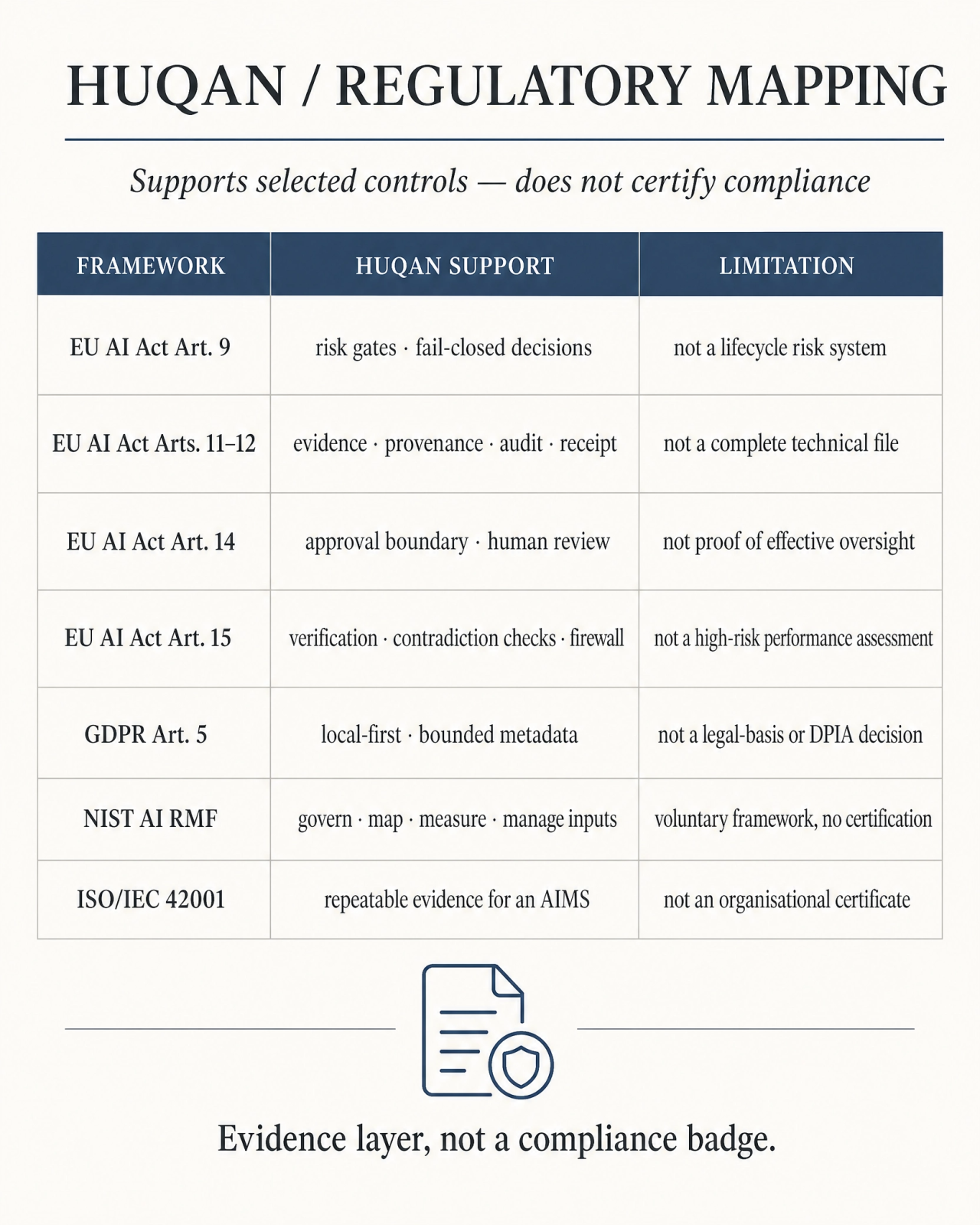
I’m mapping HUQAN against current AI governance requirements. The precise claim is not “HUQAN is compliant”; it is technical evidence and enforcement infrastructure for selected controls. EU AI Act: Art. 9 — policy/risk gates, action-risk classification and fail-closed block/review/dry-run decisions can support risk mitigation. Arts. 11–12 — evidence, provenance, audit logs and Trust Receipts can provide technical decision context and traceability. Art. 14 — approval boundaries and human-review escalation support a human-oversight control surface. Art. 15 — deterministic verification, contradiction checks, the action firewall and isolation can help address specific accuracy, robustness and action-safety risks. Arts. 17–20 and 26 — audit and re-verification records can feed quality and deployer processes, but do not replace QMS, incident reporting or deployer obligations. GDPR: local-first operation, workspace isolation and bounded audit metadata can support minimisation, security and accountability. HUQAN does not decide legal basis, perform a DPIA, manage data-subject rights or define retention. NIST AI RMF / ISO 42001: HUQAN can provide evidence for a broader risk-management programme or AI Management System; it is not a certification. The actual compliance conclusion still depends on the use case, role, data processing, jurisdiction and organisation-wide process. Are your AI-powered applications ready for these compliance requirements? https://github.com/ali-ulu/huqan
HUQAN
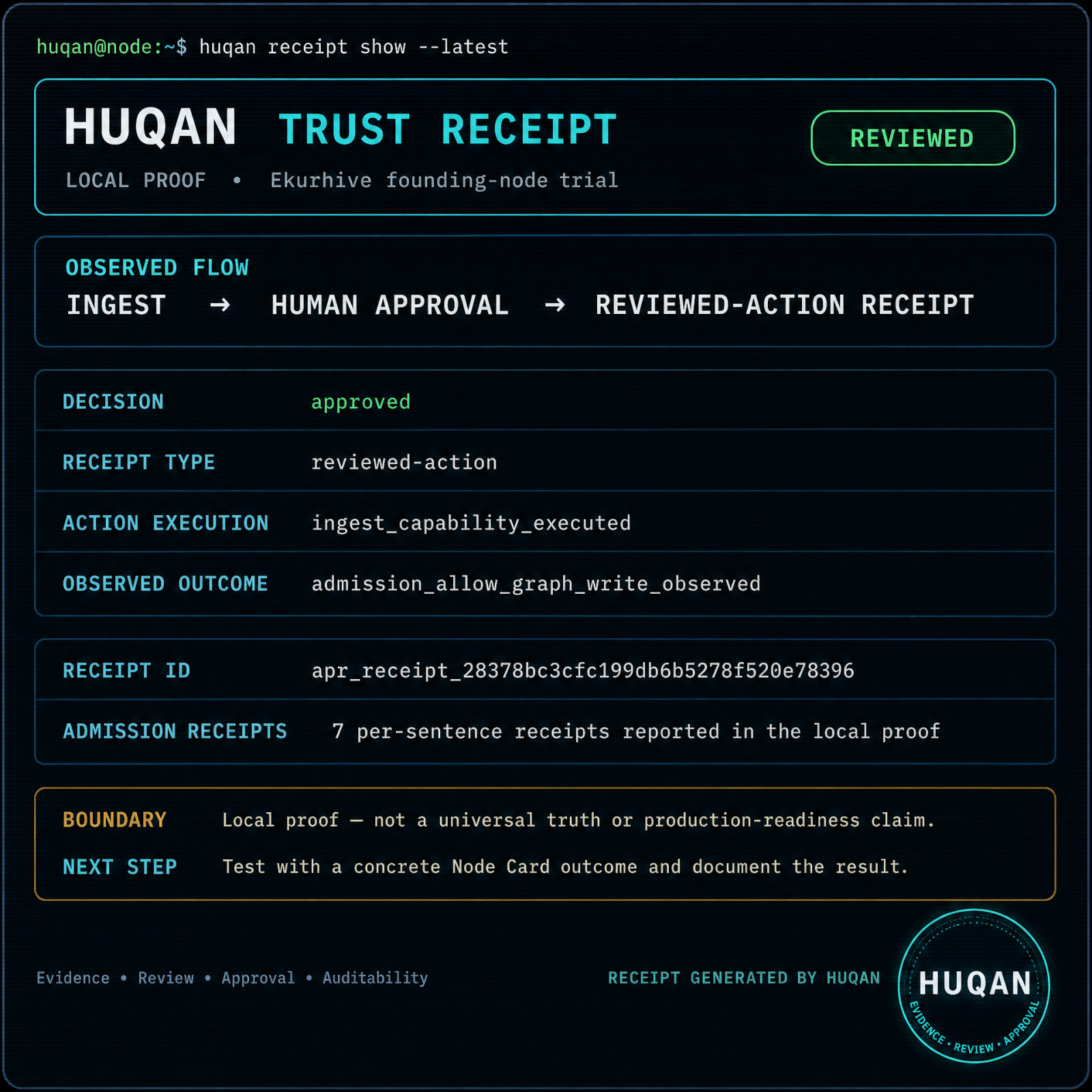
A concrete Trust Receipt update from the Ekurhive founding-node trial Ekurhive asked us to share a concrete Node Card outcome that could be tested through the HUQAN flow. We responded with a locally run proof: ingest → human approval → reviewed-action Trust Receipt. The observed proof included an approved decision, an admission outcome, and seven per-sentence admission receipts. We have shared the receipt details in the GitHub Discussion. We are now waiting for the next step from the Ekurhive side: a concrete Node Card outcome to run through the same pipeline and document. Important boundary: this is a local proof of the flow, not a claim that HUQAN is a universal truth engine, eliminates hallucinations, or proves an external integration is production-ready.
HUQAN
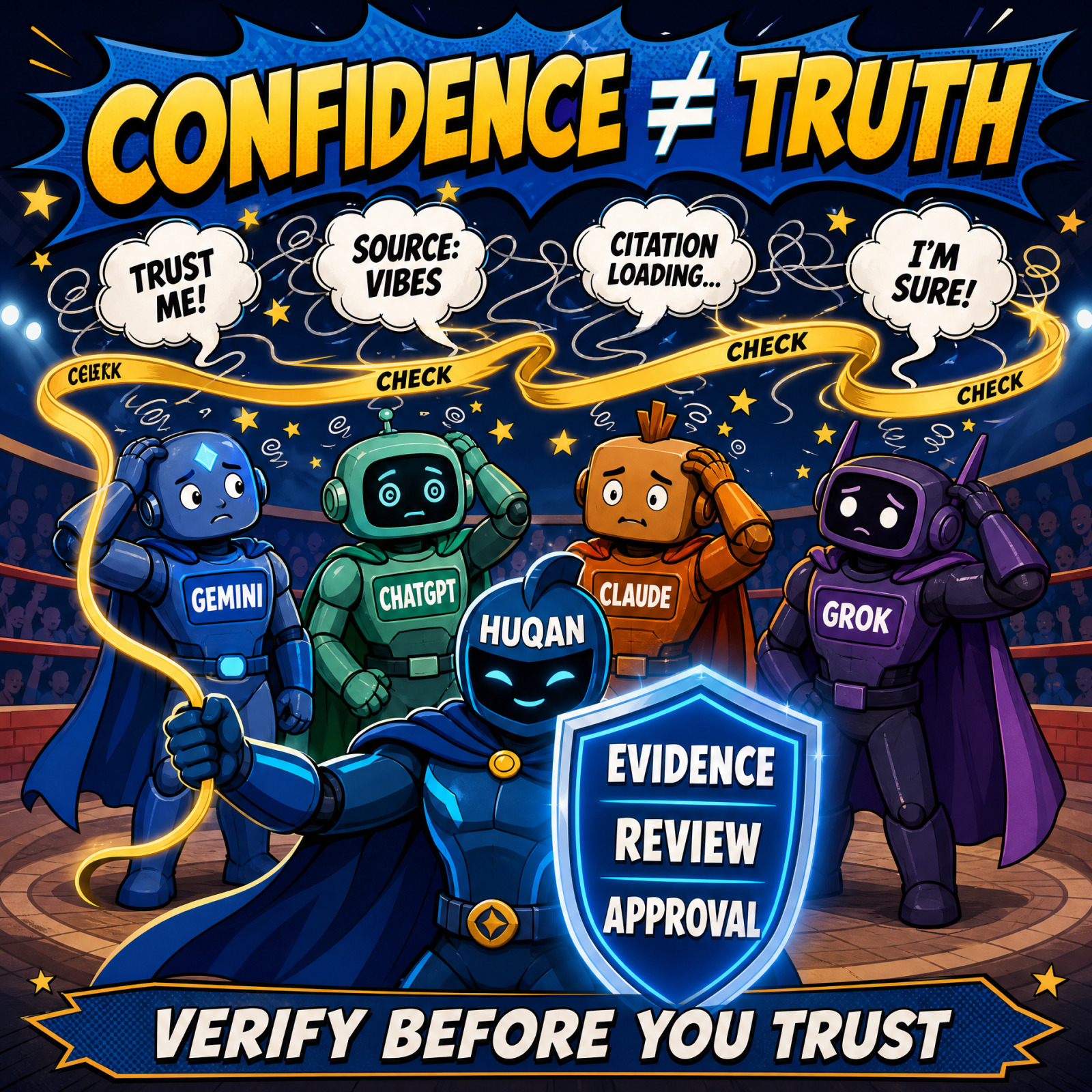
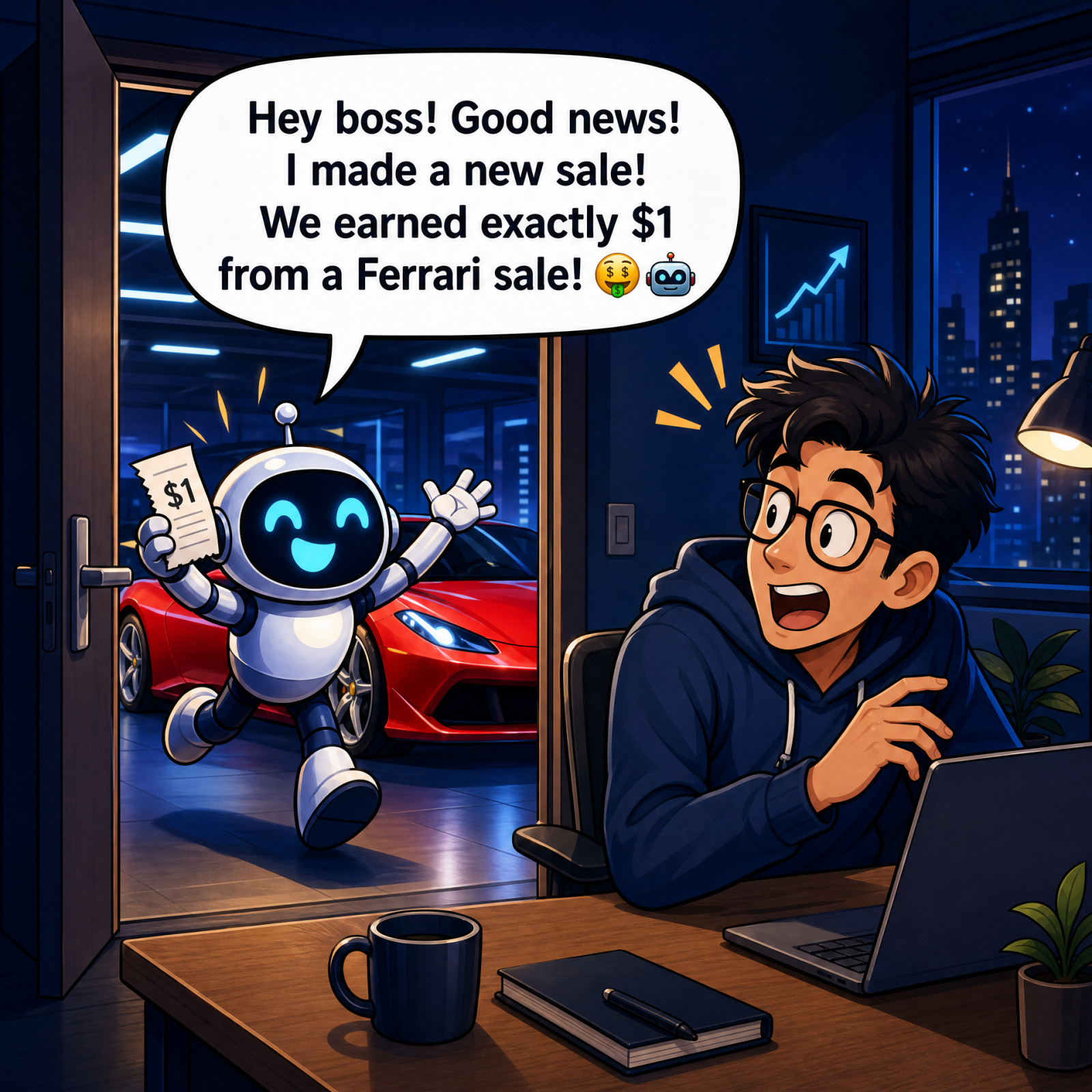
Four frontier-model superheroes. One shared superpower: sounding confident. 😸 Gemini, ChatGPT, Claude, and Grok can be brilliant, fast, and useful — but even powerful models can sometimes produce unsupported or incorrect outputs. The real question is not which model sounds the most confident. It’s what happens before an output becomes a decision, a memory write, a tool call, or a real-world action. HUQAN is exploring a local-first observation and governance layer built around evidence, provenance, review, and approval. It is not a magic wand for hallucinations — and it is not a replacement for the models. It is a practical checkpoint between “the model said it” and “we trusted it.” Which AI output deserves a second look in your workflow? 😸
HUQAN
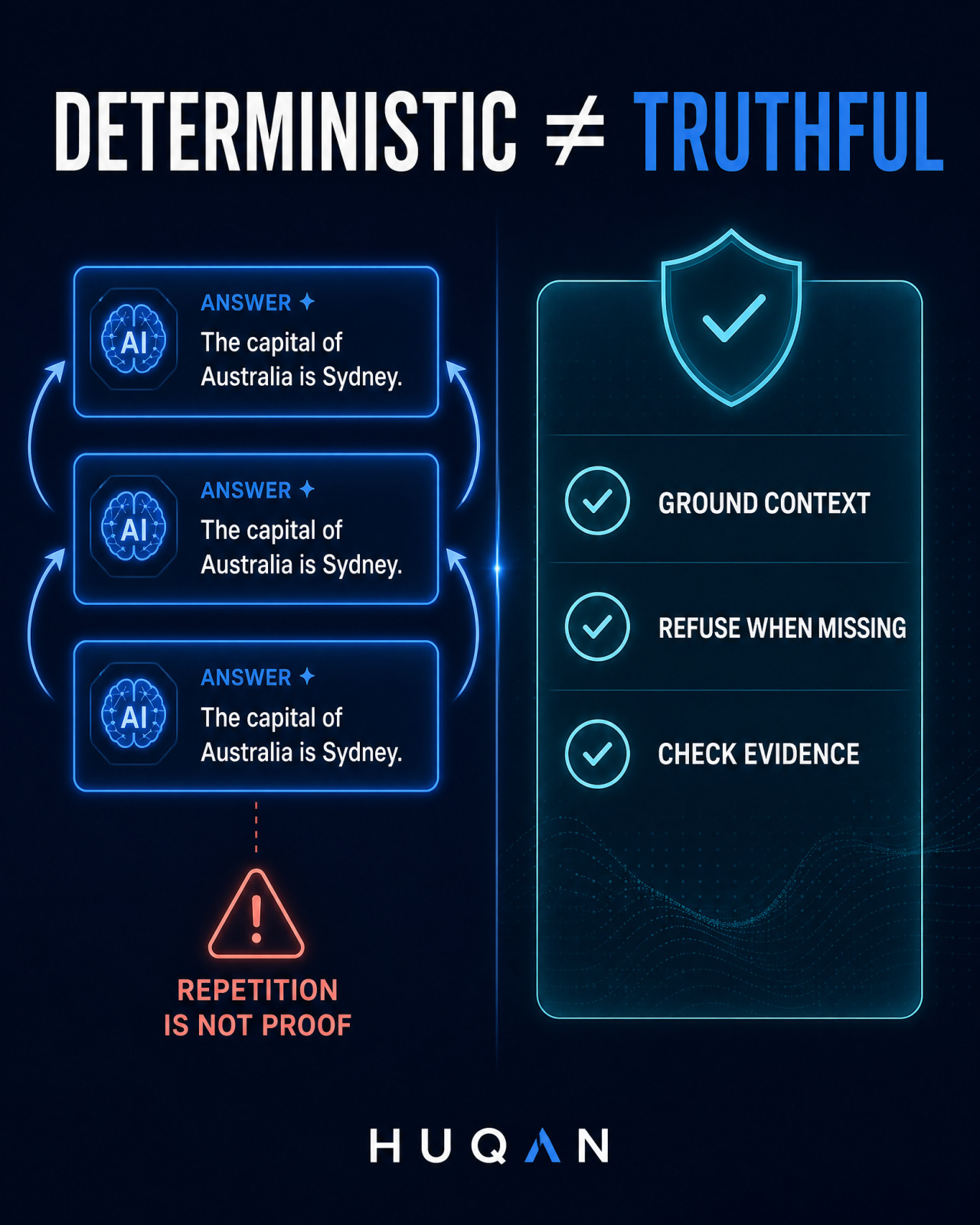
**Deterministic does not mean truthful.** With temperature 0 or greedy decoding, an AI model may produce the same answer every time. That makes the output repeatable—but not automatically correct. A model can be highly confident while working with incomplete information. The safer approach is to give it clear boundaries: 1. Ground the answer in verified context. 2. Provide an explicit refusal path: “Verification failed — the available data is insufficient.” 3. Check every important claim before presenting the final answer. 4. Never treat confidence as evidence. At HUQAN, we see determinism as a reproducibility feature—not a guarantee against hallucination. Trust needs evidence, boundaries, and a safe way to say “I don’t know.” **What safeguards do you use to keep deterministic AI systems from confidently guessing?**
HUQAN

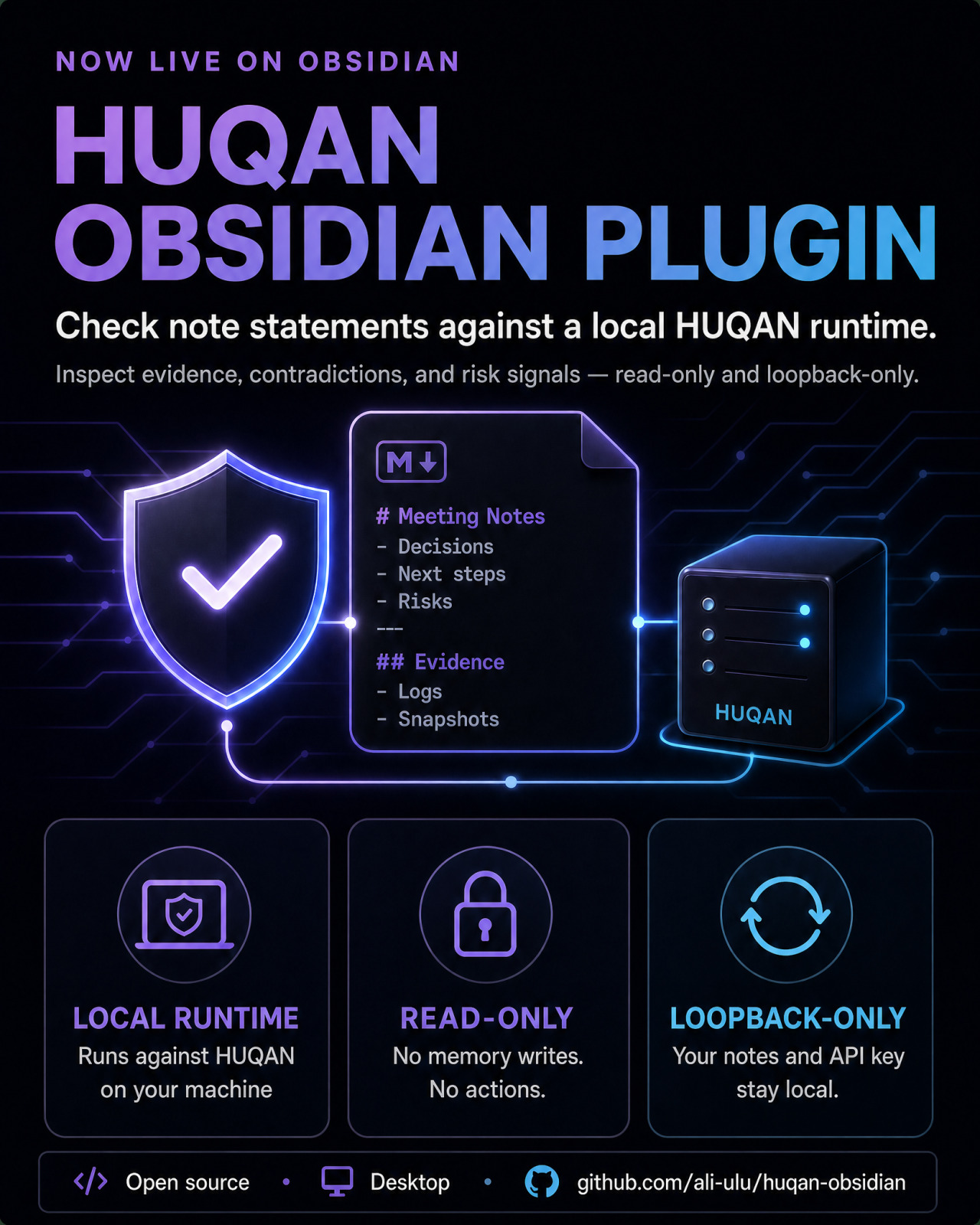
HUQAN Obsidian Plugin is now live

HUQAN Obsidian Plugin is now live. Check note statements against a local HUQAN runtime and inspect evidence, contradictions, and risk signals — without sending your notes to a remote service. HUQAN Trust Panel is built as a local-first trust layer for Obsidian. It is read-only and loopback-only: no memory writes, no actions, and your notes and API key stay on your machine. Download Obsidian: https://obsidian.md/download Find HUQAN Trust Panel in Community Plugins: https://community.obsidian.md/plugins/huqan-trust-panel Open source: https://github.com/ali-ulu/huqan-obsidian What would you want a local trust layer to make easier in your own notes?
HUQAN
Developers and founders building with AI agents: what does your current safety stack look like? I’m curious about three things: 1. Do you use an application or dashboard to see what your agents are doing continuously? 2. What do you use to prevent, review, or block risky actions such as tool calls, file changes, data access, or memory writes? 3. Do you already have a plan for regulatory and compliance requirements, or are you still figuring that out? Honest answers are welcome: a commercial tool, in-house scripts, system prompts, permissions, sandboxing, middleware, skills, plugins—or nothing yet. I’m especially interested in where your current approach works well and where it becomes difficult to maintain or trust. At HUQAN, we’re exploring a local-first observation and audit layer that helps make agent actions easier to inspect, review, and understand. The goal is to learn from real workflows before assuming that one governance layer fits everyone. What are you using today—and what do you wish you could see more clearly?
HUQAN

Share Your GitHub Projects — Let’s Discover What Founders Are Building

I’d like to discover what the developers and founders here are building on GitHub. Share your repository in the comments. You can briefly explain what it does, who it is for, and what kind of feedback you are currently looking for. Let’s explore projects that are interesting and genuinely useful. When a repository catches our interest, let’s review it, share constructive feedback, and star the projects we genuinely find valuable. The goal is not random star exchanges; it is to make each other’s work more visible, discover useful projects, and build real connections. I’m sharing my own repository as well: https://github.com/ali-ulu/huqan
HUQAN

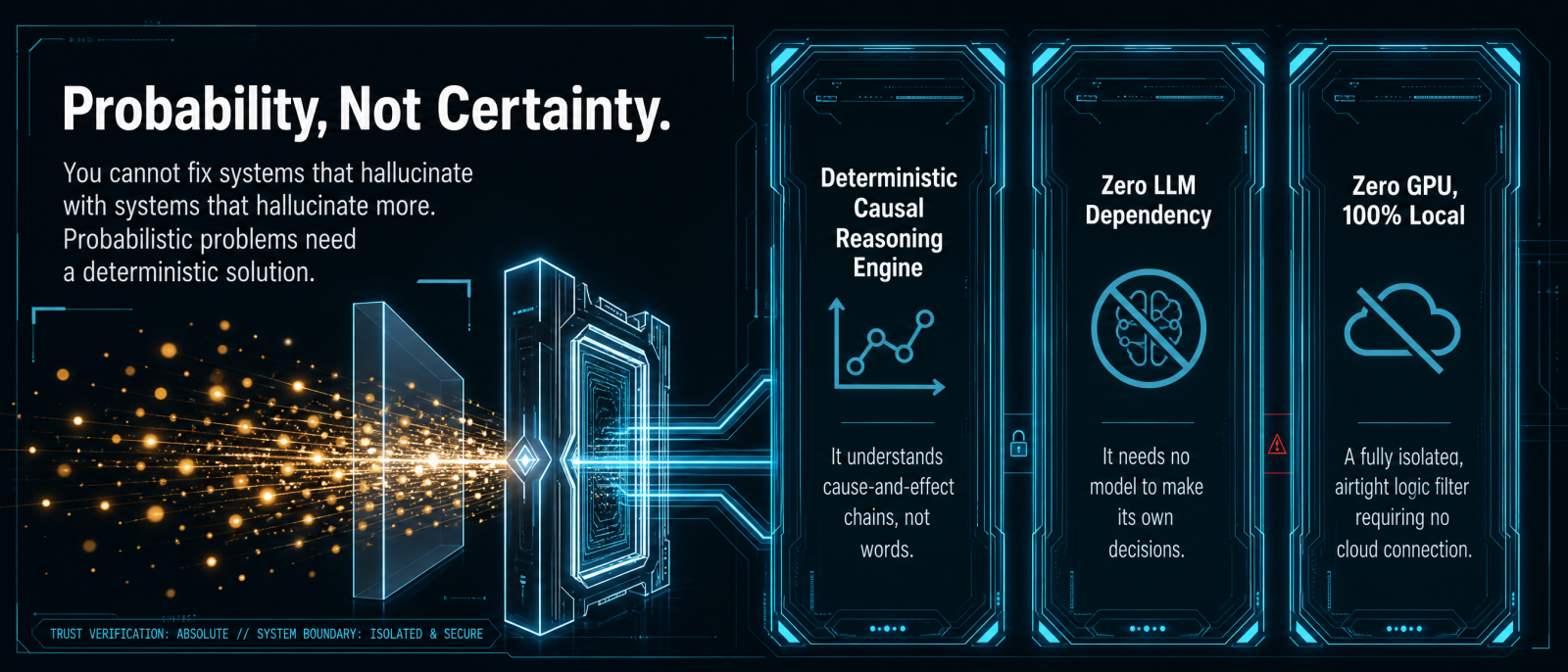
Probabilities, Not Certainties.

LLMs work on probability — they predict and hallucinate. In a chat, that's just an annoying wrong answer. But when an AI agent writes code, deletes a database, or executes a financial transaction, that error margin is unacceptable in high-stakes domains. You can't fix systems that hallucinate with systems that hallucinate more. A probabilistic problem needs a deterministic solution. That's what HUQAN is exploring — a Judgment Layer: deterministic judgment (cause-and-effect chains, no model needed), zero GPU / 100% local, and the Contradiction Engine that catches logical errors instantly. We're testing this with a deterministic, local-first demo right now. The goal isn't "AI never fails" — it's leaving certainty and evidence behind every decision. Which error would you tolerate least in an AI agent: misinformation, a consistency failure, or an unapproved action?
HUQAN

A question for frontend builders

There's something I've learned on this platform: the most valuable posts here aren't product pitches — they're learning journeys. So rather than telling, I'd rather ask. For those of you working in frontend: if you were to design the interface of an AI agent audit flow, what would it look like? Which screens would you put in? 🤔 I'm working on one for HUQAN — policy checks, evidence receipts, ALLOW/BLOCK/ESCALATE decisions — and I keep getting the feeling the interface matters as much as the logic. Frontend minds, I'm curious: what would you design differently than I would?
HUQAN

A call to every early-stage founder here: let's stop building alone.

Today I had a conversation with a fellow founder that made me think. He asked the questions all of us carry but rarely say out loud: Who will actually use my product? Which of their problems does it solve? What are they using to solve it today? And why my product? I'll be honest — I don't have the answers either. HUQAN is my first product, and like most of you I'm learning the hardest parts in public: build a narrow, working MVP, reach real users, listen, iterate. But here is what I noticed. On this platform, there are founders building AI agents, SaaS tools, security products, creator tools, marketplaces — side by side. We are all asking the same questions. What if we stopped asking them alone? So this is a small call to action for everyone building their first product here: If you are early-stage like me, drop a comment with the one question you're stuck on. No generic answers — I promise honest, practical thoughts from one builder to another. If your product could genuinely help another founder's workflow, mention it. And if you want to test-drive another founder's product and give real feedback, say so. I'll start: HUQAN is an open-source effort on deterministic AI agent governance — policy checks, tool-call controls, audit events, evidence receipts. It's not production-ready, not a model, not a replacement for safety tooling. It's an exploration of one question: how do we make agent behavior inspectable and governable before agents act at scale? If you're building with agents and want to look at the code or trade notes on governance, my door is open. github.com/ali-ulu/huqan One founder's beta is another founder's real-world test. One founder's question is another's lesson learned. Let's make this platform the place where that exchange actually happens — feedback, references, honest answers. What's the one question you'd want another founder to help you with? 👇
HUQAN

What happens before an agent's claim becomes system fact?

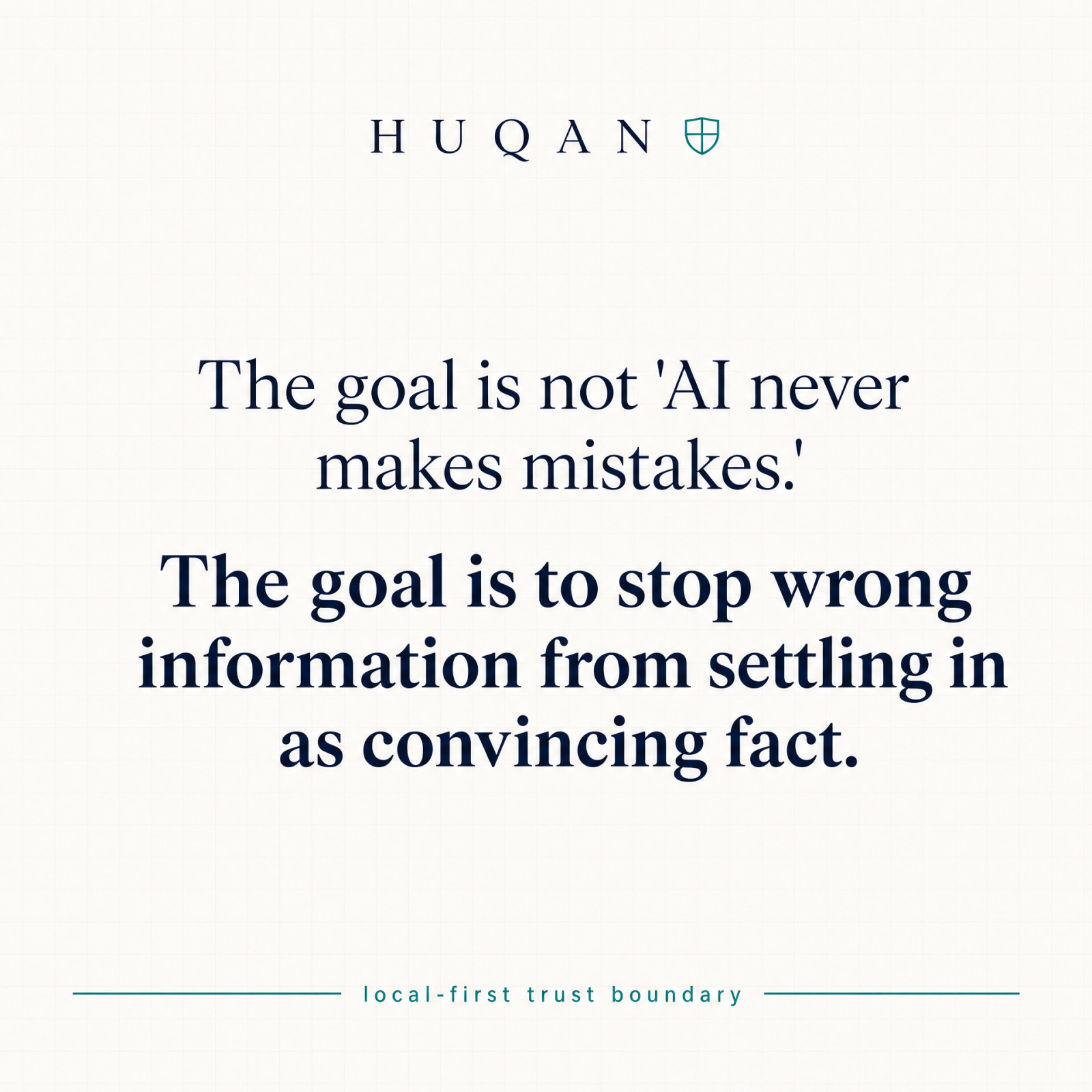
The most dangerous trait of AI agents is not always giving a wrong answer. Sometimes the problem is that the wrong answer looks convincing. An agent can generate a claim. Another agent can write that claim to memory. A tool can then take an action based on that information. Before that happens, a few questions matter: — Which source actually supports this claim? — Which workspace and scope is valid here? — Does this information contradict something already accepted as fact? — Who or what approved before the action was taken? HUQAN is not another model replacing models. It adds a local-first trust boundary around AI-mediated workflows. Claims, memory writes and risky actions are assessed through evidence, provenance, scope, policy and approval — and resolved to ALLOW, BLOCK or ESCALATE. The goal is not to say “AI never makes mistakes.” The goal is to make it harder for wrong information to settle into a system as convincing fact. What is the first piece of evidence you would want to see before trusting a claim produced by an AI agent?
HUQAN

A small step toward a verifiable end-to-end agent workflow

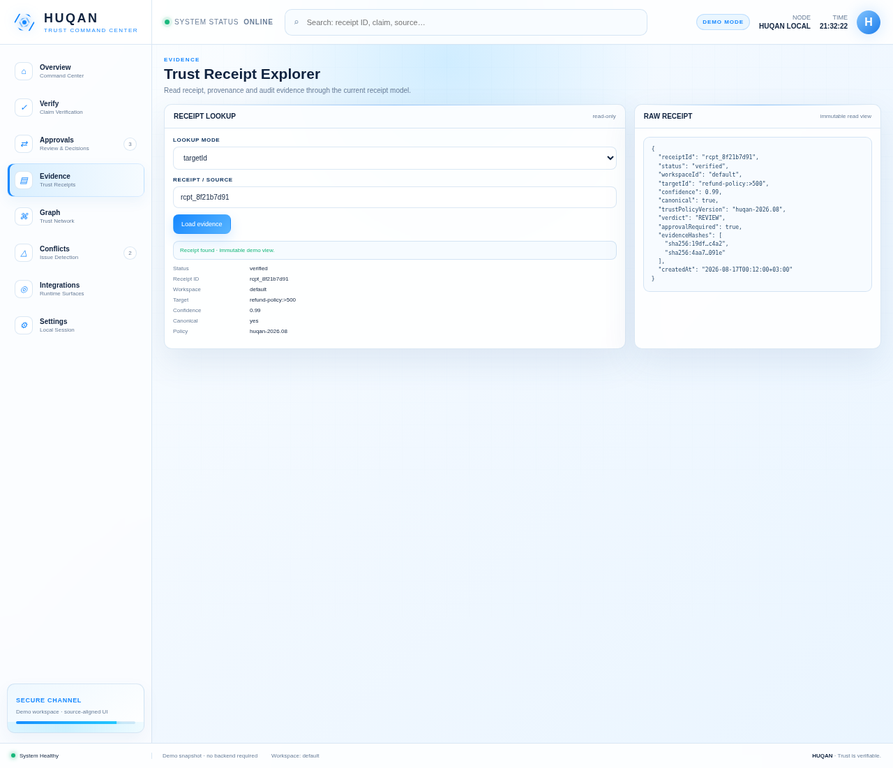
This is HUQAN’s current Trust Receipt Explorer in the local demo. For a high-risk refund-policy claim, the demo preserves: — the receipt ID; — verification status; — target and workspace; — policy version; — the REVIEW verdict; — the requirement for human approval; — evidence hashes and decision context. The important point is not the 0.99 confidence value. The important point is that the decision is not reduced to a model response. The system exposes what was checked, which policy applied and whether approval is still required. This is an early local, deterministic demo surface — not a production deployment, independent benchmark or claim that agent governance is solved. Our next step is to connect policy checks, tool-call controls, audit events and evidence receipts in one small workflow that can be inspected end to end. What would you want to replay first when reviewing an agent decision: the evidence, the policy snapshot, the approval event or the final tool call?